
Fall in Cognac: The Month When Your Fireplace or Stove Becomes Indispensable

An autumn that takes its time
Since the 1970s, temperatures in Charente have been about two degrees higher. Nothing alarming in itself—just the weather changing its rhythm, slowly, year after year. In practical terms, this pushes back the arrival of cold weather by several weeks. The stove we used to light “just for the ambiance” in October is, once again this year, the one that really heats the house: a bit like a leading actor who finally steps into the spotlight.
Tip from Karine: If your stove has been doing all the work since September, that’s a sign it deserves a little attention before winter—not just a fire every now and then.
The small gesture we put off (and are wrong to put off)
Let’s be honest: having your chimney swept is a bit like getting your car inspected. We know we have to do it, but we always find a good reason to put it off. Strictly speaking, it isn’t a required document for the sale—but it’s one that the notary very often checks at the time of signing, and its absence can be costly: the insurance company may refuse to pay out in the event of a claim, and the seller could be held liable for a hidden defect if they knew about it and didn’t disclose it.
💡 Tip from Karine: That’s exactly why I always have the chimney swept before putting a property on the market. Since a November 2025 ruling by the Court of Cassation, a professional who passes on information from the seller without verifying it is personally liable. Working with an agency or a consultant means you’re protected by this verification requirement—not just receiving guidance.
A true story, based on a case file
Before the house went on the market, I had the chimney swept, as I always do. The seller assured me he’d never had any problems: “It draws very well, never smokes—we light it every winter.” On paper, everything looked fine.
Except that once on site, the professional was categorical: it was strictly forbidden to use or light a fire. The flue needed to be cleaned of thick, accumulated soot—which could catch fire at any moment—and the wooden chimney support was already partially burned on the inside, ready to catch fire completely the next time it was used.
It’s exactly these silent, sudden fires that take families by surprise in the middle of the night. “It’s always worked fine” says nothing about the actual condition of a chimney you can’t see with your own eyes. Only a professional can tell, and a whole winter of peace of mind hinges on this single appointment.
💡 Tip from Karine / If you're selling: keep your chimney-sweeping certificates safe. It really puts buyers at ease and helps you avoid awkward questions during showings.
💡 Tip from Karine / If you’re buying: Make it a habit to ask for the chimney-sweeping certificate before signing—even if the stove looks brand-new, even if “it’s always worked.” This will help you avoid unpleasant surprises (and sometimes much more than just a bill).
A useful point to note: Unlike the energy performance certificate (DPE) or asbestos inspections, there is no mandatory official inspection required for fireplaces being sold. This is a topic that is rarely discussed, even though it deserves your full attention.
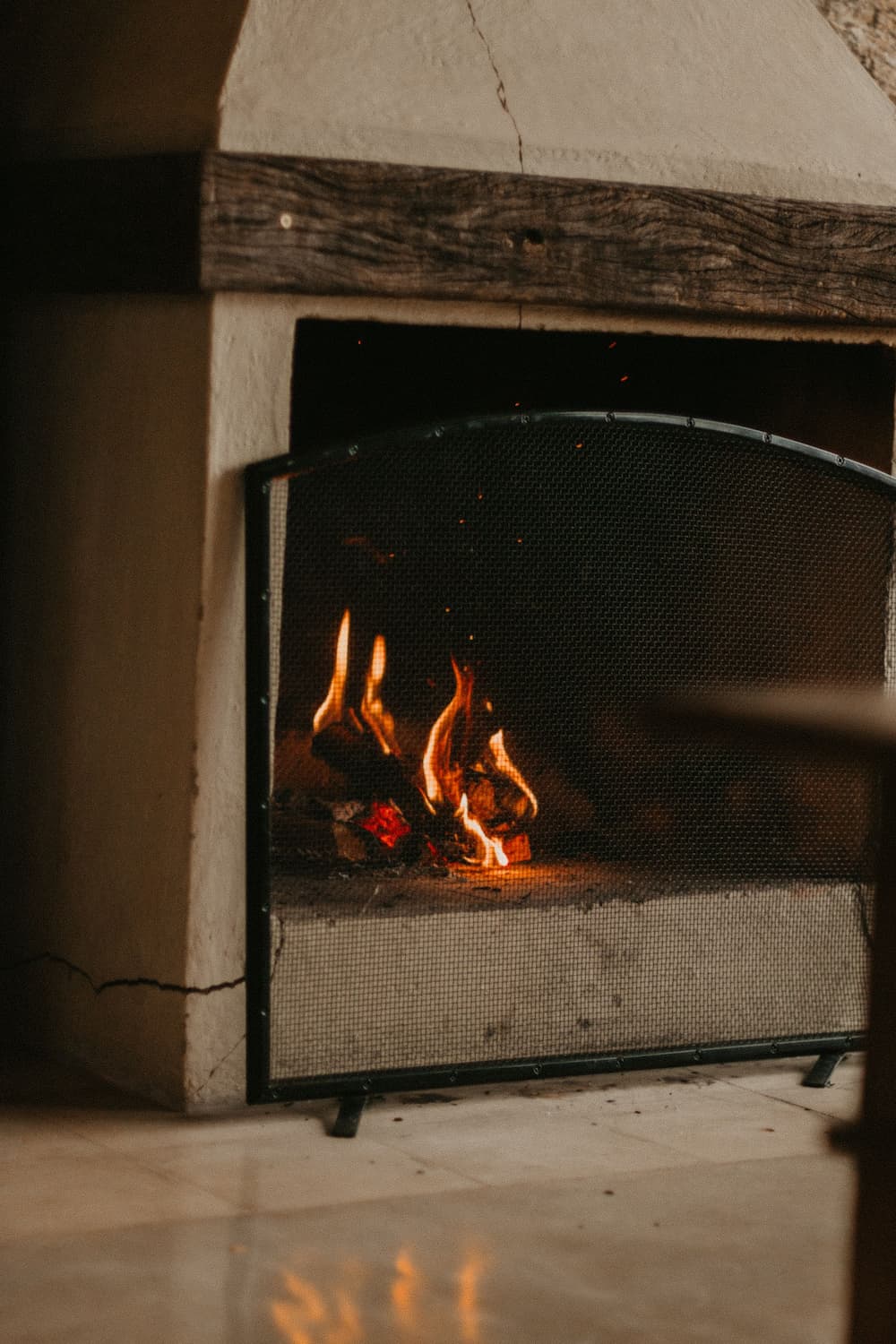
Our beautiful 60-cm stones also have their moods
In the summer, these thick walls save the day with their natural coolness. In the fall, it’s a different story: the stone takes a long time to warm up, and a single stove sometimes struggles to keep up in large rooms—it’s as if the house breathes too slowly for the season.
💡 Tip from Karine: Instead of adding a second stove “just in case,” think about complementary solutions: a programmable pellet stove or a heat pump as a backup often works wonders and is a smarter long-term investment.
A brief but important aside: not all stoves and fireplaces are treated equally in the Energy Performance Certificate (EPC). An open fireplace counts for little, if at all, in the calculation: its efficiency is too low to be considered a true heating source. A certified stove or insert, on the other hand, can significantly improve a property’s EPC rating.
💡 Tip from Karine: If you install a stove, be sure to keep the technical specifications and the appliance’s certification (NF mark, Flamme Verte, etc.) in a safe place. This document will allow the inspector to properly account for it in your Energy Performance Certificate; without it, your beautiful new appliance doesn’t exist on paper.
These stone houses have weathered many winters before us. Giving them a little help today simply means continuing their story with a little more comfort—and, above all, peaceful nights for you and your loved ones.